
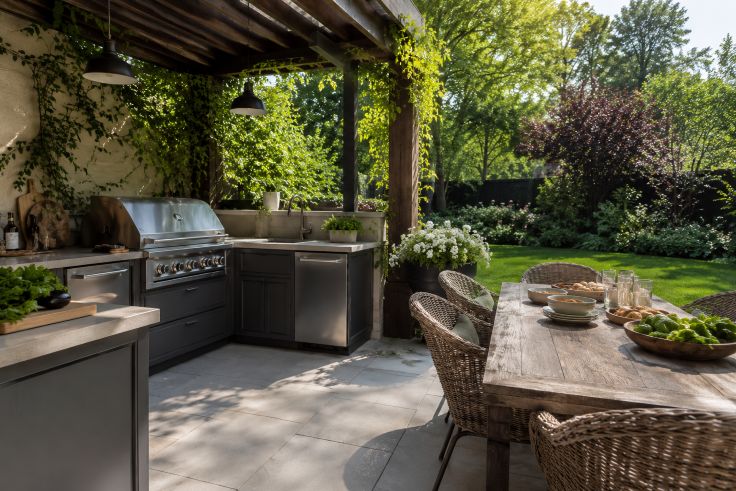
Outdoor cooking involves more than moving a barbecue onto a patio. A practical cooking area needs space for preparing ingredients, handling raw and cooked food safely, cleaning up, storing equipment and serving meals. Food-safety guidance from the U.S. Department of Agriculture emphasizes four basic practices: cleaning, separating raw and ready-to-eat foods, cooking to safe temperatures and chilling food promptly. These principles are just as relevant outdoors as they are in the kitchen.
The surrounding environment deserves attention too. Gardens and patios increasingly contain lighting, storage, cooking equipment and heating technology, all of which compete for space. Where an outdoor heating unit sits close to a dining area, for example, appropriately designed heat pump covers can help make mechanical equipment less visually prominent. Any screening, however, needs to account for the manufacturer’s requirements for airflow, access and maintenance.
1. Give Food Preparation Enough Space
A barbecue may provide plenty of cooking capacity while offering almost no useful preparation space. Without a suitable work surface, plates, chopping boards and ingredients can quickly end up competing for the same small table.
Plan a dedicated preparation surface close enough to the cooking area to be convenient, but with enough room to separate different tasks. The USDA advises keeping raw meat, poultry, seafood and eggs away from ready-to-eat foods because contaminated juices can transfer harmful bacteria. Cutting boards, utensils and worktops should also be washed after handling raw foods.
For an outdoor setup, this means thinking about workflow before choosing decorative finishes. There should be a logical path from ingredient preparation to cooking and finally serving.
2. Plan How Hands Will Be Washed
Handwashing can easily become inconvenient when cooking takes place at the far end of a garden. That inconvenience matters when someone is moving between raw ingredients, cooked food, utensils and serving dishes.
The U.S. Food and Drug Administration recommends washing hands with soap and water for at least 20 seconds before and after handling food. Its outdoor food-safety guidance also stresses regular cleaning of cutting boards, dishes, utensils and counters.
A permanent outdoor sink may make sense for an elaborate kitchen. For a simpler setup, easy access to the indoor kitchen can be sufficient. The important point is to consider handwashing during the planning stage rather than treating it as an afterthought.
3. Decide Where Waste Will Go
Outdoor cooking produces packaging, food scraps, disposable towels and other waste. A bin positioned too far away encourages clutter around the preparation area, while one placed directly beside food can become unpleasant.
Build waste management into the layout. A covered receptacle positioned within convenient reach can make cleaning easier, while separating rubbish from food-storage and preparation zones creates a more orderly workspace. The FDA Food Code, although primarily intended as a model for retail and food-service regulation, treats waste handling, plumbing and physical facilities as important parts of a safe food environment.
4. Think About Lighting Before the First Evening Meal
Good ambient lighting can make a patio inviting, but cooking requires more focused illumination. Someone preparing meat or checking a grill needs to see the work surface clearly.
The FDA Food Code establishes lighting requirements for professional food-preparation, storage and cleaning areas, reflecting the practical importance of visibility when handling food. For a domestic outdoor kitchen, task lighting above preparation and cooking areas can serve a similar practical purpose. Good lighting can also influence how ingredients and finished dishes are seen at the table, which is worth considering when making healthy meals look more appealing through thoughtful presentation.
Lighting should also cover paths between the indoor kitchen, cooking station and dining table, particularly where steps or changes in floor level are involved.
5. Create Storage for More Than Cooking Tools
Tongs and barbecue utensils are obvious candidates for storage, but outdoor cooks often need much more. Serving dishes, chopping boards, thermometers, paper towels and cleaning supplies all need somewhere to go.
Storage also needs sensible organization. FDA guidance for food-service environments recommends keeping potentially toxic substances, including cleaning and sanitizing products, away from food-handling and storage areas where practical. The same principle provides a useful starting point at home.
Weather resistance matters as well. Cabinets exposed to moisture need materials and construction appropriate for outdoor conditions rather than simply replicating indoor kitchen storage.
6. Prepare for Weather, Not Just Sunshine
An outdoor kitchen designed exclusively around perfect summer afternoons may see limited use. Shade can make hot days more comfortable, while appropriate shelter can protect preparation areas from light rain.
Weather protection should still leave cooking appliances safely ventilated and installed in line with their manufacturer’s instructions. Wind deserves consideration too. The Met Office advises monitoring weather forecasts when planning outdoor activities because wind and rain can create rapidly changing conditions.
Temperature also affects food safety. The FDA advises that perishable food should generally not remain outside refrigeration for more than two hours, reduced to one hour when outdoor temperatures exceed 90°F, or about 32°C.
7. Account for Nearby Mechanical Equipment
Heat pumps, air-conditioning units, drainage, utility boxes and other equipment may already occupy the most convenient part of a patio. Designing around them requires more than hiding what looks unattractive.
Start by identifying equipment that requires airflow, drainage or regular servicing. Screening can then be considered as part of the wider layout without making essential equipment difficult to reach. Decorative enclosures, planting and changes in furniture position can reduce visual clutter, but practical operating requirements should take priority over appearance.
This is especially relevant when the dining table overlooks a utility area. Thoughtful planning can visually separate cooking and eating spaces from mechanical equipment while preserving the access technicians may eventually need.
A Better Outdoor Kitchen Starts With the Small Details
A successful outdoor cooking area is ultimately defined by how easily people can prepare, cook, serve and clean up after food. A large grill may attract the most attention during planning, but work surfaces, handwashing, waste disposal, lighting, storage and weather protection determine how practical the space becomes.
Looking beyond the cooking appliance also helps the area fit more naturally into the rest of the property. Existing utilities and mechanical systems can be incorporated thoughtfully rather than concealed without considering how they operate. Addressing these less obvious details early can create an outdoor food space that is safer, easier to use and better prepared for everyday meals as well as larger gatherings.
